Breaking Up Dog Fights
If you’re familiar with Laurie Lawless, you’ll know how she feels about the role of playgroups in animal shelters. Playgroups provide enrichment, increase staff welfare, and give ample opportunities for valuable data collection, but there’s also some natural risk involved when you add a playgroup program to your shelter.
Dog fights can happen any time two dogs meet. Whether staff is monitoring an initial introduction between two dogs or running a multi-dog playgroup, they should always have the tools, training, and best practice protocols to fall back on if a fight breaks out. Let’s talk about how to prepare your shelter to break up dog fights.
Preparing For a Dog Fight
First thing’s first, it’s important to set up your shelter to avoid dog fights–and to provide the necessary tools when one inevitably happens. Let’s talk about some initial things you can do to prevent and prepare for a dog fight before one ever takes place.
Design Your Play Area With Intention
Because playgroups involve multiple dogs coming together in one space, it’s important to intentionally design playgroup spaces. Carefully consider the size of your yard in relation to staff ratios and playgroup cohorts, strategically add obstacles to naturally slow the pace of play, and include multiple stash pens for easy transition to and from the yard.
Keep The Right Tools on Hand
Even with the most intentionally designed play yard, your staff still will likely find themselves dealing with a dog fight at one point or another. Ensure they have the proper tools to intervene safely and effectively, including (but not limited to):
Be sure that all of these tools are readily available and that staff know where to find them quickly. We’ll talk in more detail about how some of these tools might be used below.
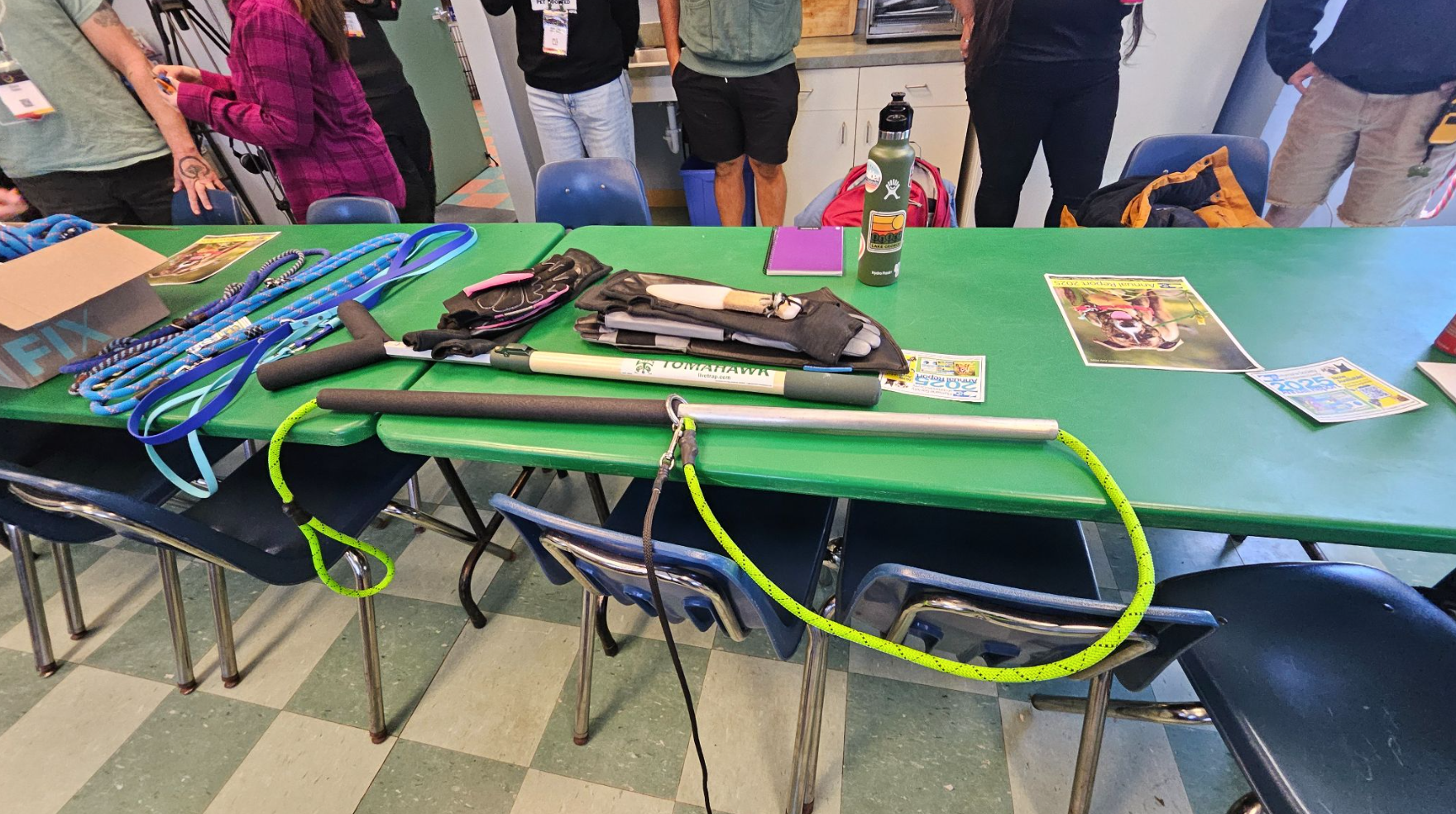
Before you begin running playgroups, make sure that staff and volunteers have the tools necessary to ensure safety for all involved.
Have a Plan
Ensure that your shelter has clearly defined roles and procedures in the case of a dog fight. Within a playgroup team, decide ahead which staff members will leave to get help, which staff members will secure other dogs in the area, and which staff members will actively intervene in a fight. Additionally, have procedures in place for different types of fights, and thoroughly train staff and volunteers in fight management techniques ahead of playgroup or dog introduction involvement.
Dog Fights: Do’s and Don’ts
Now that we’ve discussed how to prepare for a dog fight, let’s talk about how to put all of your preparations into action. Here are some basic “do’s” and “don’ts” of dog fight management that every shelter professional should know. To find more information about these guidelines and demonstrations of techniques mentioned, check out Laurie Lawless and Trish McMillan’s Maddie’s Fund webinar, where they elaborate on how to break up dog fights in animal shelters.
Don’t
First, let’s talk about the “don’ts.” These are general guidelines and not hard-and-fast rules, so use discretion when developing your shelter’s dog fight protocols.
Put yourself in harm’s way
When a dog fight breaks out, it can be tempting to reach between the dogs, to grab collars, or to use your body to break up the fight. This can lead to bites and serious injury and should be avoided in favor of hands-off techniques, like spraying water and using noise as a deterrent. When these techniques fail, escalate to safe hands-on techniques, like the wheelbarrow.
Pick up small dogs
Dangling or picking up a small dog during a dog fight might seem helpful, but it has the potential to cause more damage if the other dog jumps up to try and bite them. If they manage to get a grip, gravity could end up causing the bite to do more damage as the dog pulls down toward the ground.
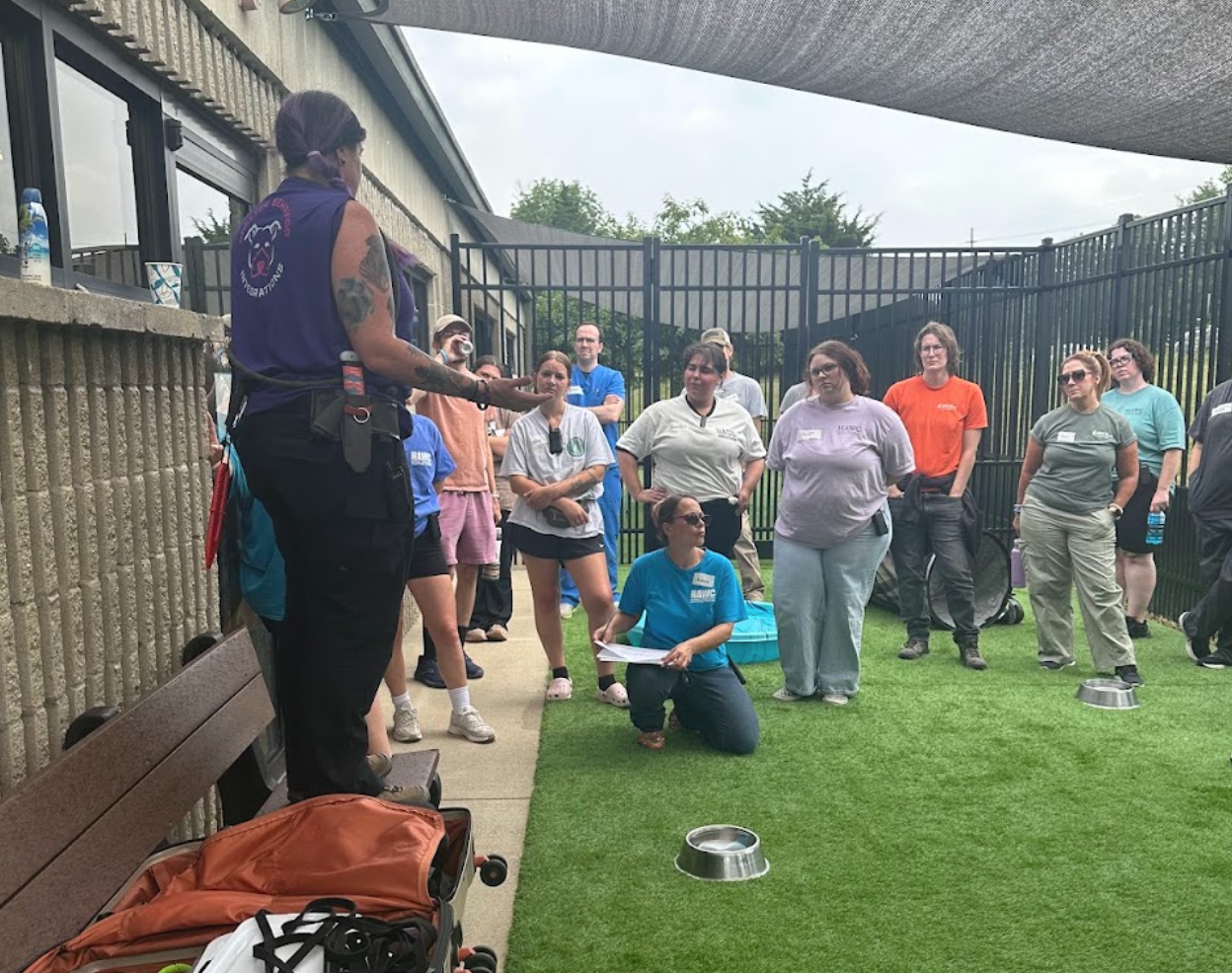
Intentional and thorough staff training can help to prepare your shelter for crisis situations so you can respond accordingly.
Pull gripping dogs away from each other
If a dog fight escalates so that one dog is attached to another, it’s natural to try to pull the attached dog off of the one being gripped. However, this well-intentioned action can have unintended consequences, causing more damage to the gripped dog and tearing flesh as you try to pull their attacker away.
Do
Now, let’s talk about what you should do in the case of a dog fight. As with the “don’ts,” these are general guidelines that should be modified to the unique needs of your shelter.
Remember that you have time
When a dog fight breaks out, it can be easy to panic. While it might feel necessary to quickly intervene, it’s important to strike a balance between urgency and recklessness. “Most dog fights are a lot of noise and spit, and there’s typically not a lot of damage,” remarks Trish McMillan in this Maddie’s fund webinar, so remember to take a deep breath and respond intentionally.
A notable exception to this rule is when a dog’s airway is blocked, when a dog’s jaw is caught on another’s collar, or when there is a large size disparity between the fighting dogs. In these cases, you should still refrain from panicking, but a higher level of urgency is definitely warranted.
Immediately get help
After you’ve taken a breath and composed yourself, it’s important to immediately call for backup in the face of a dog fight. Ideally, you should have a dedicated team member who is responsible for doing this as soon as a fight breaks out, leaving more senior staff to intervene in the meantime.
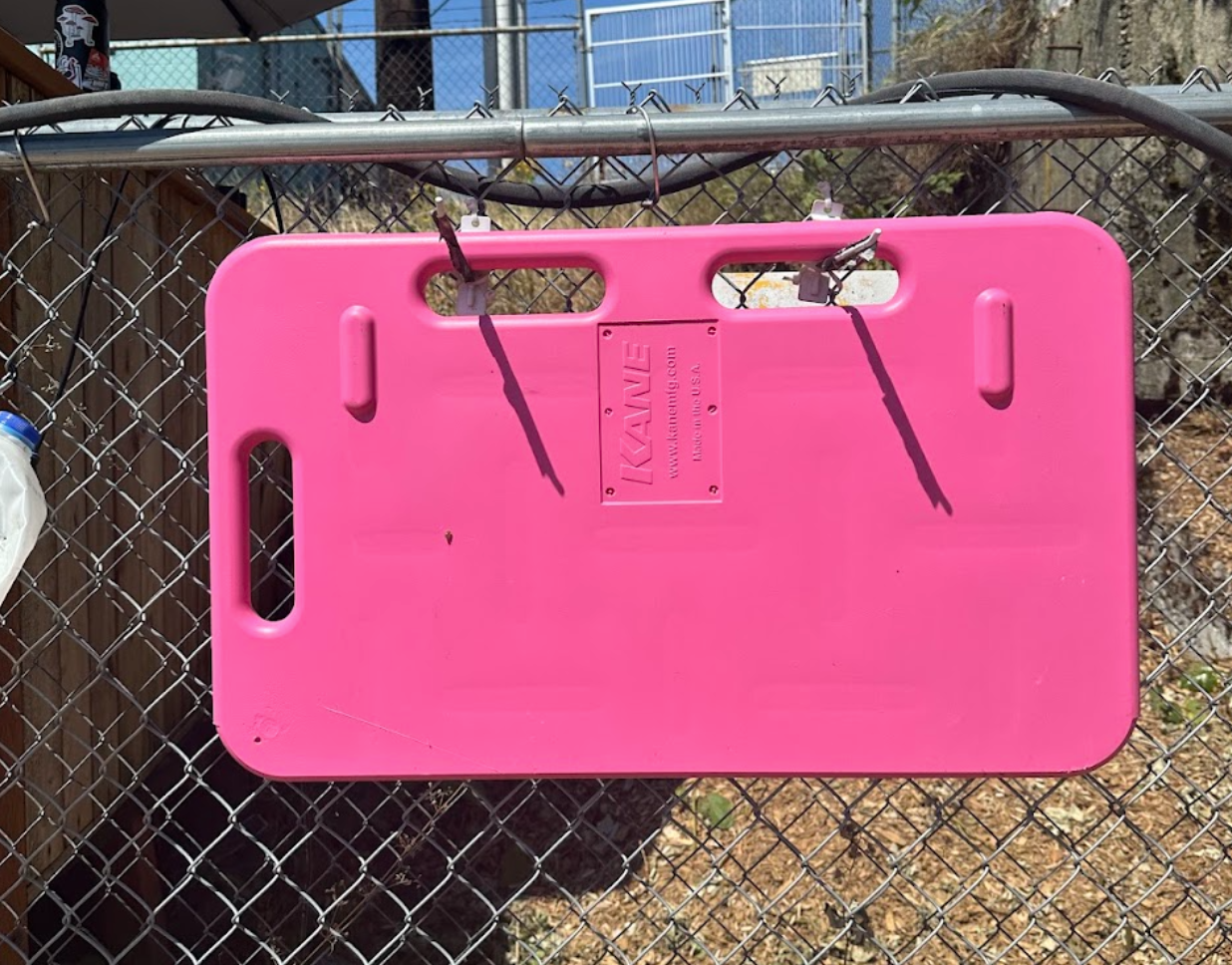
Pig boards are valuable tools to help create barriers between dogs during fights.
Escalate from less aversive to more aversive as needed
When a dog fight begins, it’s important to begin interventions with the least aversive techniques, working your way up to more aversives only when absolutely necessary. Here are a few examples of dog fight intervention techniques, from least aversive to most aversive:
Drag line: Trish recommends all unfamiliar dogs in a play yard be attached to a drag line, allowing staff to step on the line and quickly break up a fight as soon as it breaks out.
Water: If this isn’t enough, you might escalate to using a spray bottle or hose to spray the offending dogs below the neck, which will often shock them out of their fight.
Noise: If the dogs continue to fight, you can move up to noise-based aversives, like rattle paddles, shakers, and (as an absolute last resort) air horns. Just bear in mind that these aversives will affect every dog in the play yard, not just the dogs actively fighting, so use noise with caution to avoid unnecessary psychological harm.
Place a barrier between fighting dogs
The main goal of any dog fight deescalation is to get a door between the two dogs in question. However, creating any barrier between the dogs can be effective in stopping a dog fight long enough to move the dogs to separate areas. You might use a pig board, y-pole, or even trash cans or other debris around the play yard to create a temporary barrier between the dogs. Additionally, towels, blankets, or jackets thrown over the dogs can be helpful to block their view of each other, with the added darkness often naturally breaking up a fight.
Use hands-on techniques only when absolutely necessary
Hands-on techniques have the potential to cause harm or injury to staff and volunteers, so they should only be used with caution and as a last resort. Check out the Maddie’s Fund webinar for demonstrations of techniques like the “control position” and “wheelbarrow,” which are hands-on techniques that maximize safety and handler control.
Be strategic when separating attached dogs
If a dog fight results in one dog gripping another, you should always refrain from simply trying to pull the dogs away from each other. Instead, utilize a break stick or strategies like “feeding the bite” to strategically separate the attached dogs without added damage.
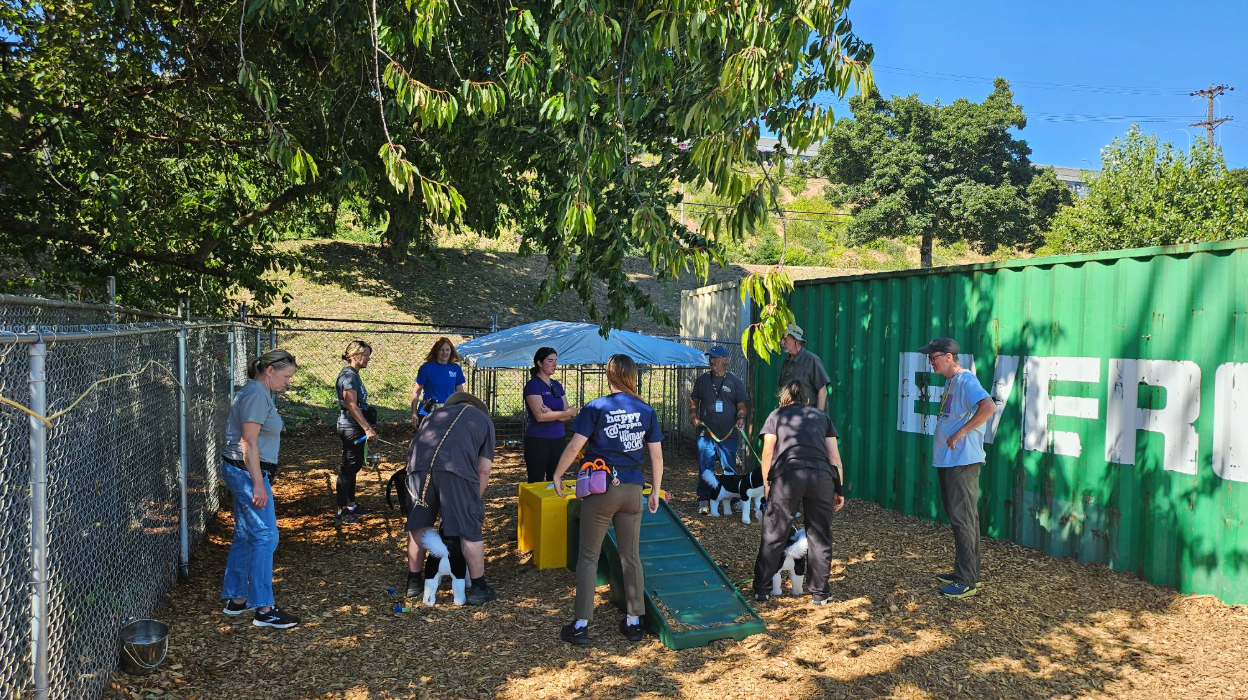
Laurie Lawless offers in-person training to ensure that all shelter staff and volunteers are prepared to run playgroups and intervene in dog fights where necessary.
Creating Intentional Playgroups at Your Shelter
Looking to start a safe and effective playgroup but unsure of where to start? Shelter Behavior Integrations (SBI) offers a number of playgroup-focused services, from remote training and mentorship programs to on-site playgroup initiatives. Check out the SBI website to learn how Laurie can help your shelter and schedule a one-on-one call for more personalized support.