How to: Setting up a Playgroup Program
To those of us in the animal welfare field, it’s no secret that playgroup programs have a ton of benefits for shelter dogs and staff. In addition to improving welfare through enrichment and play, playgroups keep kennels quieter, give opportunities for better behavioral observations, and boost staff morale.
However, it’s important that playgroup programs are set up with care and intention. To that end, we’ve created this simple, step-by-step guide to setting up a playgroup in your shelter.
Before You Begin: Playgroup Guidelines
Before you begin building your playgroup program, consider the guidelines created by the Shelter Playgroup Alliance (SPA). A grassroots team that was formed to “provide animal welfare organizations with education, tailorable guidelines, and support materials for developing and implementing comprehensive enrichment programs,” the SPA promotes tools and strategies that follow the “Least Intrusive, Minimally Aversive” (LIMA) ideology. Here are a few SPA-approved best practices for building a shelter playgroup program:
Prioritize positive reinforcement: Positive reinforcement and non-aversive interventions should be the first line of defense when managing dogs in a playgroup setting. Playgroup staff should be trained to intervene in the least intrusive manner first, only escalating to more aversive interventions should the situation demand it.
Control stress and arousal: While playgroups are beneficial to the wellbeing of shelter dogs, excessive stress and arousal are not. Your playgroup can easily tip over from enriching to distressing if stress and arousal are not managed through practices like limiting the number of dogs in each playgroup, maximizing staff ratios, and giving dogs the choice to opt in or out of playgroup participation.
Build transferable skills: Ideally, playgroups should serve to foster behaviors that make shelter dogs more likely to succeed in an adoptive home. Playgroup programs should focus on building skills–like polite dog-dog play and prompt recall–that are transferable to an adoptive home.
Don’t skip out on other forms of enrichment: Playgroups are an excellent source of shelter enrichment, but they’re far from the only type of enrichment shelters should be providing to dogs in their care. Be sure to have a variety of enrichment options available to the dogs in your care.
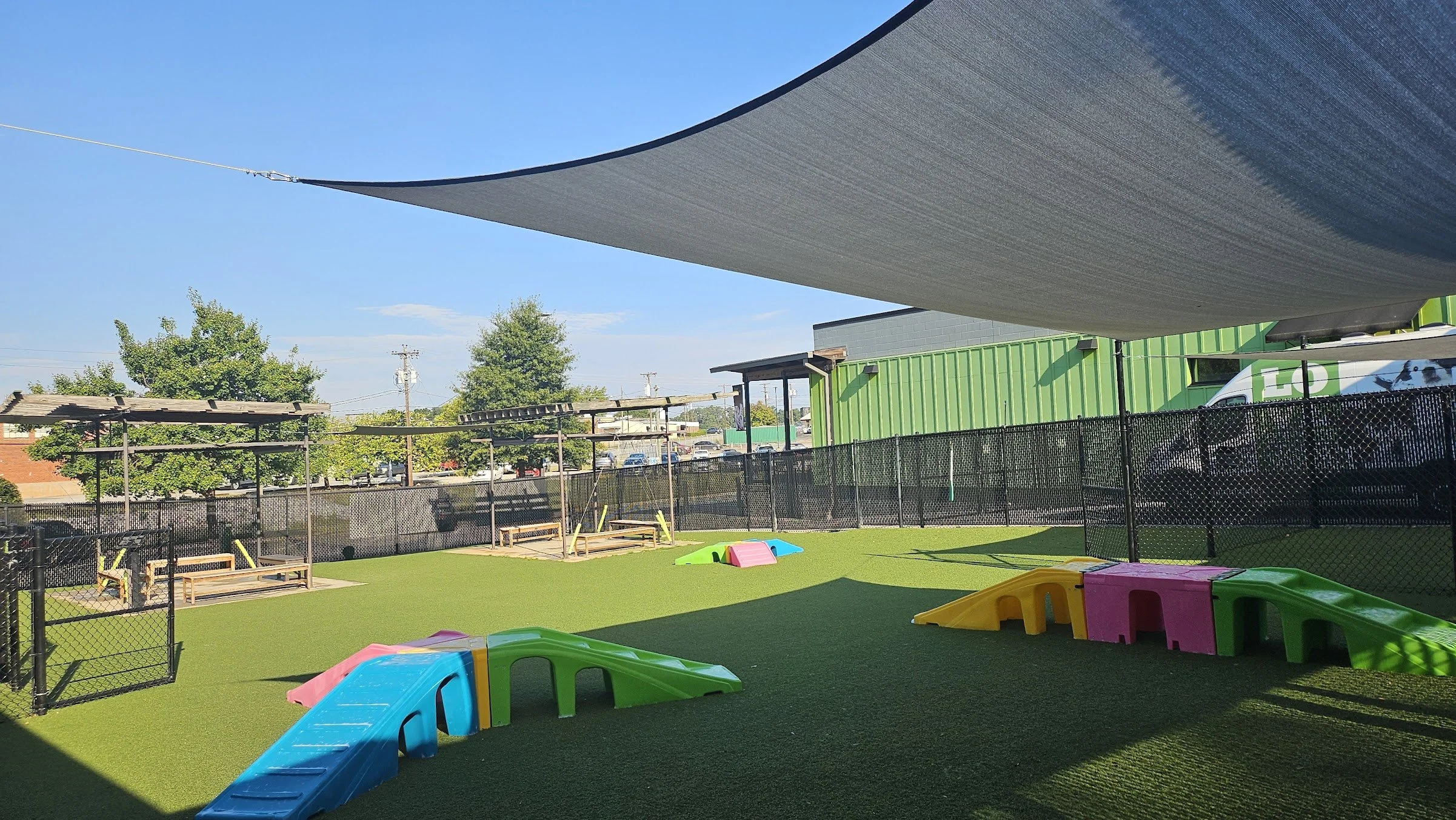
Utilize obstacles to divide large yard spaces, slow down the pace of play, and give points of refuge for dogs needing a break.
Step 1: Setting up Your Playgroup Space
Before building a playgroup program, you’ve got to make sure you have an adequate place to host it. Here are a few guidelines to consider as you design your shelter playgroup space:
Prioritize quiet, outdoor areas: While playgroups can be hosted in either indoor or outdoor spaces, it’s recommended prioritizing outdoor placement if you can. In addition to providing further enrichment, the outdoor environment has a number of naturally occurring sights, smells, and sounds that can serve as distractions, preventing playgroup participants from hyper-focusing on each other. That said, be sure to choose a less trafficked area of your shelter to avoid excess noise that could distract both handlers and dogs from being able to hear each others’ vocalizations and commands.
Consider size: Smaller yards are great for small cohorts of 2-4 dogs, where it’s easier to monitor and quickly intervene in dog interactions. Larger yards are great for bigger cohorts, leaving enough space for independent play and minimizing forced proximity. However, larger playgroup spaces may lead to complications as handlers will need to travel larger distances to intervene in inappropriate interactions. For the best of both worlds, strategically divide a large yard into sections using panels and gates, and maximize staff ratios to ensure that your playgroup team can adequately cover the large surface area.
Choose flooring carefully: Playgroup flooring should be non-slip and shock absorbent to prevent unnecessary strain or injury to playgroup participants and staff. Be sure that the material is easy to clean and should not get excessively hot if your shelter is located in a warmer climate. For indoor playgroup spaces, you might consider rubber mats or epoxy-based systems, whereas outdoor playgroups often feature artificial turf or rubber mulch.
Take heed of the elements: In designing your playgroup space, be sure to consider your local climate. If you’re in a warmer area, be sure to prioritize overhead shade and cooling options, like plastic swimming pools. If your shelter is located in a colder climate, consider heating solutions to allow for all-year playgroup fun.
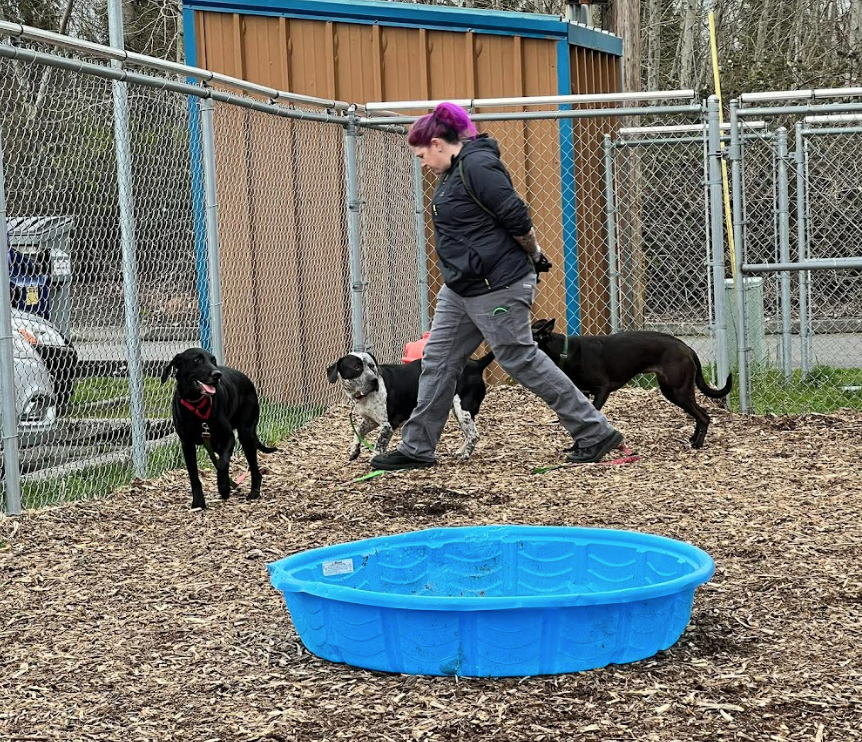
Plastic pools provide an invaluable playgroup water source, limiting resource guarding while giving dogs an opportunity to cool off in the summertime months.
Modify for convenience and safety: Lastly, be sure to design your playgroup space with convenience and safety in mind. For most shelters, this will look like including at least one airlock entrance–a small, confined space with an exterior gate and an interior gate–to safely move dogs in and out of the yard and to remove dogs in the case of a fight. Ideally, your play yard should have multiple of these spaced around its perimeter, allowing for easy transfer and/or confinement of multiple dogs at once. Ensure that your gates have sturdy latches that can be operated with one hand, and that they swing in both directions for added safety and convenience.
Step 2: Staffing Your Playgroup
Playgroups work best when staffed with a core team that is skilled and knowledgeable about dog body language, proper intervention techniques, and emergency fight protocols.
Provide thorough training: Ensure that your staff members are well-equipped with the proper training to do their job safely. Training should cover topics including (but not limited to) dog body language, LIMA-based intervention, safe handling, and fight protocols.
Communicate expectations: Your shelter’s leadership should develop and communicate protocols for emergency interventions and handling expectations ahead of time to set staff up for success.
Supply necessary tools: Be sure that staff is equipped with necessary tools for intervention and positive interactions with playgroup participants. This can include safety equipment like break sticks, plastic dividers, safety gloves, and first aid kits in combination with more generalized tools like quality collars and leashes, toys, muzzles, and personnel radios. The Shelter Playgroup Alliance also recommends equipping staff members with a treat pouch filled with food rewards, with the caveat that they are skilled in utilizing positive reinforcement techniques without facilitating resource guarding behaviors.
Prioritize camaraderie: Playgroup staff will need to be able to work well together, so it’s important that leadership encourages camaraderie and team building between staff members who have playgroup responsibilities.
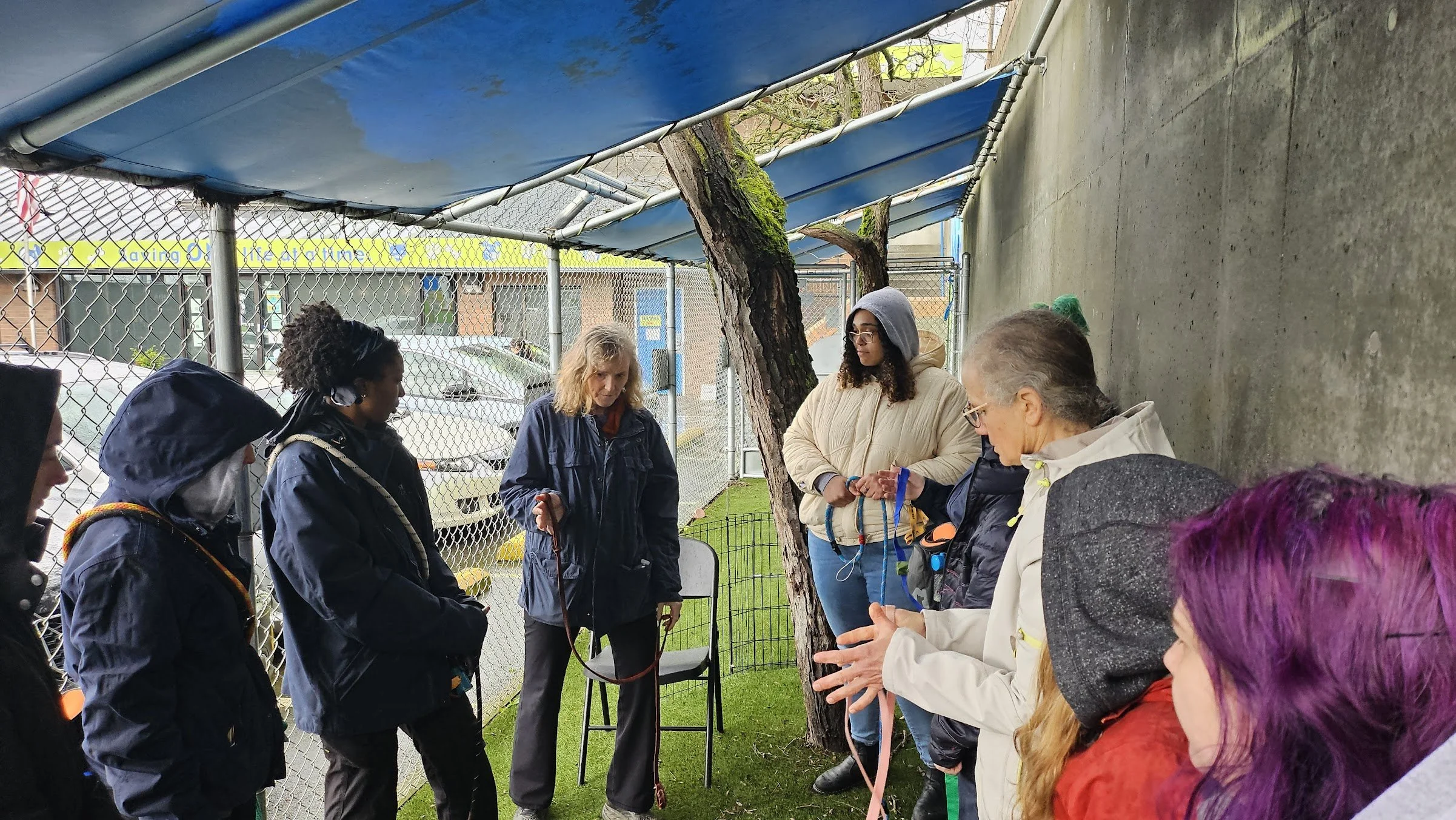
When building your playgroup team, it’s important to ensure that everybody gets along, enjoys working together, and can mesh as a cohesive team.
Assign Clear and Consistent Roles
Each playgroup should have clear and consistent staff roles to ensure that the team works as a cohesive unit. Ensure that staff is clear about their roles and responsibilities by assigning roles, including:
Playgroup Lead: This staff member is responsible for selecting dogs for Runners to add or remove from the yard, directing interventions, and breaking up fights in a swift and safe manner, with the help of appropriate staff members. The Lead should be in the yard at all times when a playgroup is taking place, only leaving once all dogs have been removed from the yard.
Playgroup Assistants: These staff members play a supporting role by following all of the Lead’s instructions, monitoring dog interactions, and intervening when appropriate. In the case of a dog fight, playgroup assistants should immediately alert other staff for help and then immediately help the Lead to carry out your organization’s fight protocol.
Playgroup Runners: Runners are responsible for bringing dogs to and from the yard, at the Lead’s discretion. These staff members should defer completely to the Lead’s instructions and, in the case of a dog fight, should confine all dogs they can in a safe space.
Step 3: Selecting Playgroup Participants
Once you’ve selected and prepared your staff for playgroup responsibilities, it’s time to select your playgroup participants. Here are some things to keep in mind when considering playgroup candidacy:
Consider size, temperament, & play style: Dogs should be grouped according to size, temperament, and play style. For instance, smaller dogs should not participate in playgroups with big dogs. Similarly, dogs who enjoy rougher play may not be best suited for playgroups that host more mild-mannered dogs. Before adding a dog to a playgroup, be sure that you have a good understanding of their individual personalities and play styles.
Follow safe introduction protocols: Be sure that your shelter has a clear introduction protocol for potential playgroup participants. Additionally be sure to pay close attention to dogs’ responses to “consent tests” to assess whether the dog in question actually enjoys conspecific play.
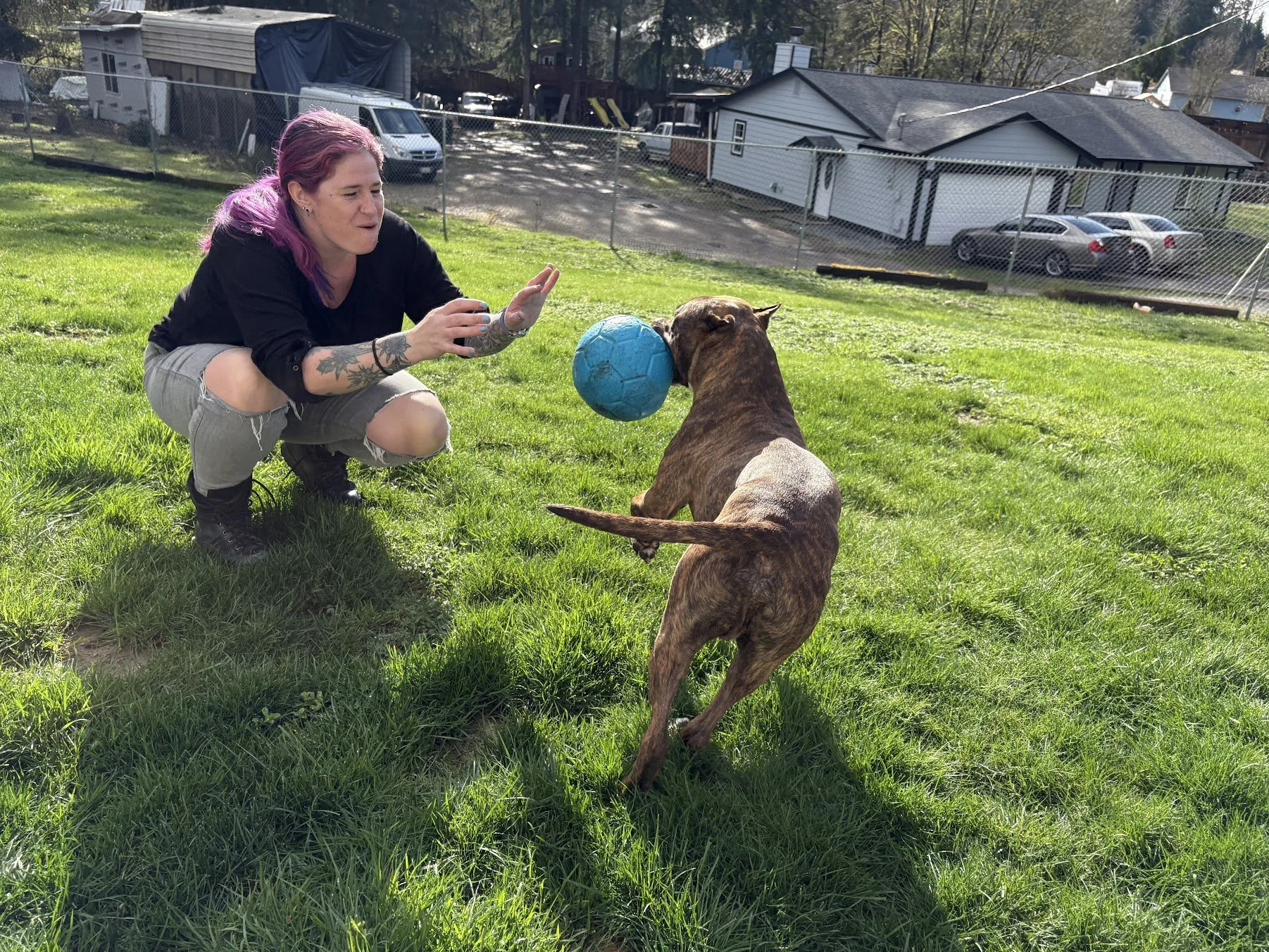
Remember: not every dog can or should be made into a “playgroup dog.” Even non-aggressive dogs might not enjoy playing with other dogs, and that’s okay! Playgroups are only enriching if all of the participants actually enjoy being there.
Tailor to your organization: Determining which dogs are suitable for playgroup participation is largely dependent on the resources and limitations of your unique organization. For instance, organizations that host more long-term residents might have more time, resources, and staffing to engage in long-term strategies to acclimate dogs to playgroup participation, whereas most traditional shelters don’t have the time or resources to engage individual dogs in long-term integration.
Step 4: Collecting Data and Measuring Success
Finally, playgroups give shelters a wonderful opportunity to collect data and clarify pathway plans. Here are a few ways that you can use playgroups to benefit your shelter’s operational efficiency:
Collect dog-level data: Playgroups are an invaluable source of dog-level data, so be sure that you’ve assigned staff members to collect and record information–like play style, bathroom habits, and response to handler interruptions–about dogs who participate in playgroups.
Track playgroup success: Use data to your advantage by regularly reviewing, assessing, and adjusting your playgroup program based on your findings.
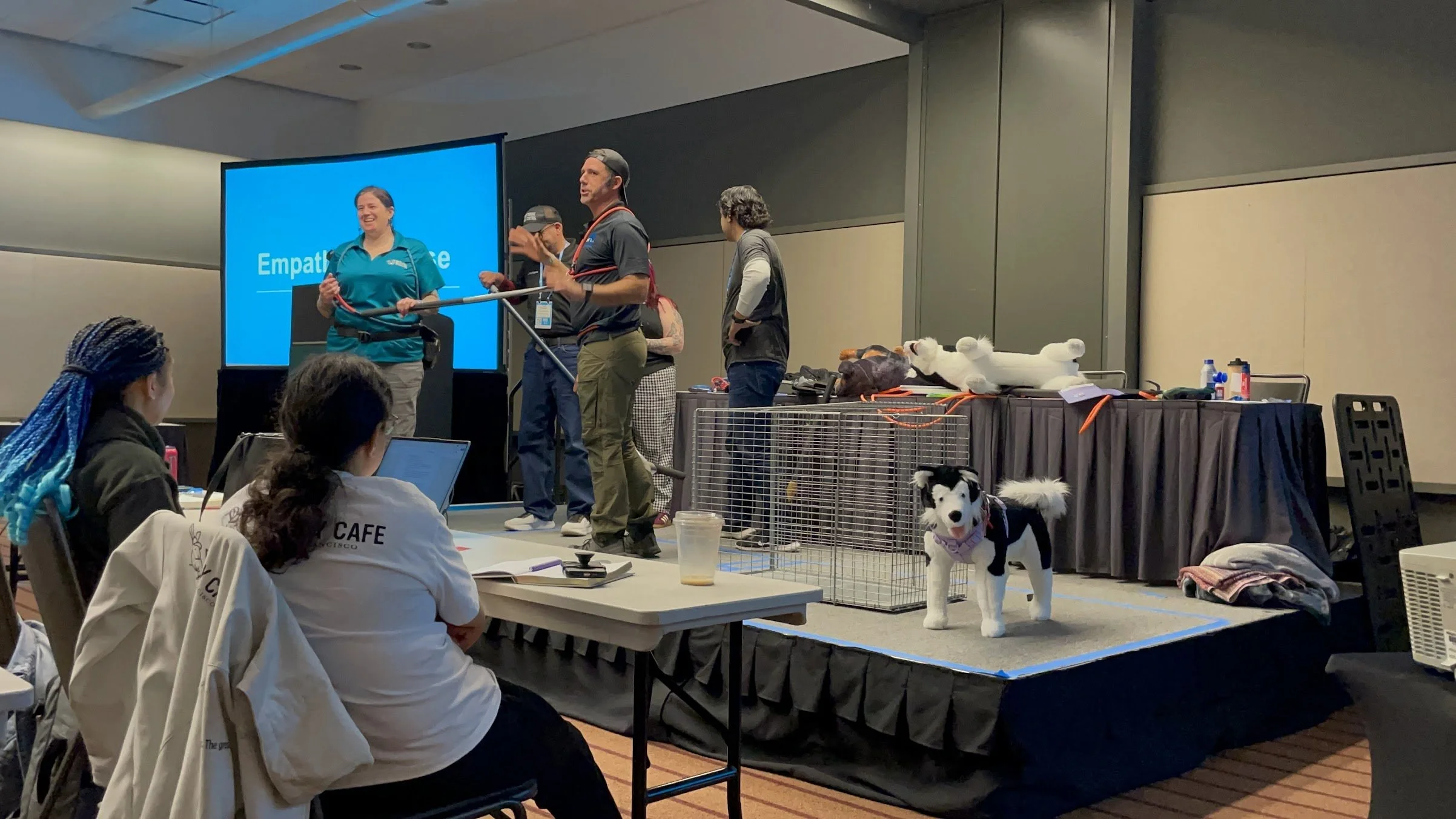
Laurie brings an essential air of fun, empathy, and collaboration to her animal welfare work. Pictured above, Laurie Lawless, John Peavler, and other shelter experts give a presentation to an audience of animal welfare professionals.
A well-oiled playgroup program is an invaluable tool for providing enrichment, enhancing adoptability, and improving staff welfare, but it’s not always easy to get started. If you think your shelter might benefit from a playgroup but are struggling to build and integrate one, it might be time to seek out professional help. At Shelter Behavior Integrations (SBI), Laurie Lawless offers a variety of remote and in-person playgroup resources that can give your shelter the push to get started. Check out the SBI website to access our online resources, view our behavior-oriented services, and schedule a one-on-one call with Laurie today.