Five Enrichment Activities for Shelter Dog Welfare
It goes without saying that dogs need regular enrichment to thrive in any setting–but especially in a shelter. Regular enrichment reduces stress and anxiety, trickling down into everything from kennel noise level to staff and volunteer welfare. That said, effective enrichment requires consistency and planning which can be tough to achieve in a hectic shelter environment. To that end, we’re sharing a few of our favorite, easy enrichment activities that can be implemented into your shelter today.
Training Sessions
Mental stimulation plays a huge role in shelter enrichment, and regular behavioral training is an excellent way to accomplish several goals at once. In addition to providing mental stimulation and valuable time with staff and volunteers, teaching basic manners can go a long way toward improving adoptability and decreasing length of stay.
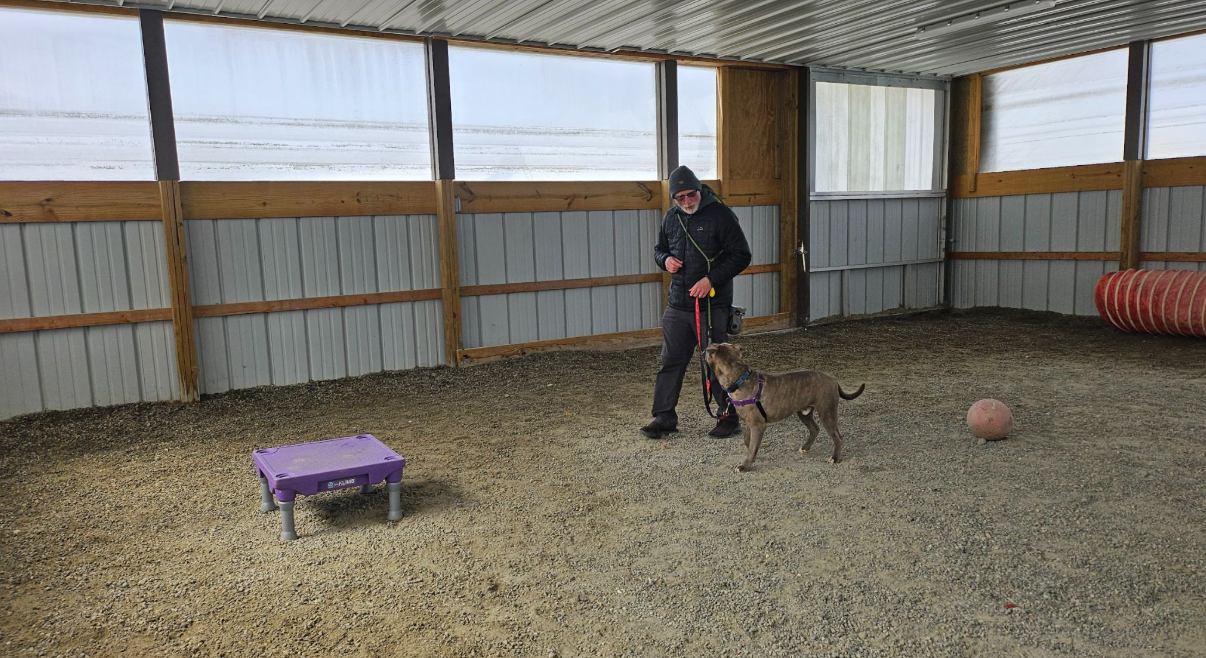
Low-stakes behavioral training is a great way to incorporate well-trained volunteers safely into behavior work.
Be sure that staff and volunteers are trained in appropriate positive-reinforcement training methods, and consider creating a regular training program focused on teaching resident dogs simple tricks like sit, stay, leave it, and leash manners.
2. Pupsicles & Other Treats
Treats are another powerful tool for shelter dog enrichment. By getting creative with how you give treats, you can get more bang for your buck when it comes to enrichment. For instance, pupsicles, frozen meals, and stuffed interactive toys can keep dogs occupied and stimulated for hours at a time.

Enrichment relies on striking a good balance between novelty and consistency, so be sure to provide a variety of enriching treats on a consistent schedule.
3. Scent Work
Smell is one of a dog’s most vital senses–and it’s important that they get to exercise it in the shelter environment. Add interesting scents, like quail, fox, or pheasant, to a piece of cardboard or paper towel, and allow dogs to sniff and tear them for a great source of mental enrichment.
Additionally, you might consider scenting bedding and blankets with calming scents like lavender, valerian, or dog-appeasing pheromones to promote calm and relaxation.
4. Audiobooks
Excess noise is one of the biggest stressors in the shelter environment. It’s easy for noise levels to spiral quickly out of control, and calming noise can be utilized for simultaneous enrichment and pre-emptive noise control. According to a study by the Journal of Applied Animal Behavior and Science, exposure to audiobooks has a calming influence on dog behavior, building on similar findings regarding the impact of classical music. So next time the kennel run starts getting rowdy on a slow day, consider throwing on your favorite audiobook to entertain both dogs and staff!
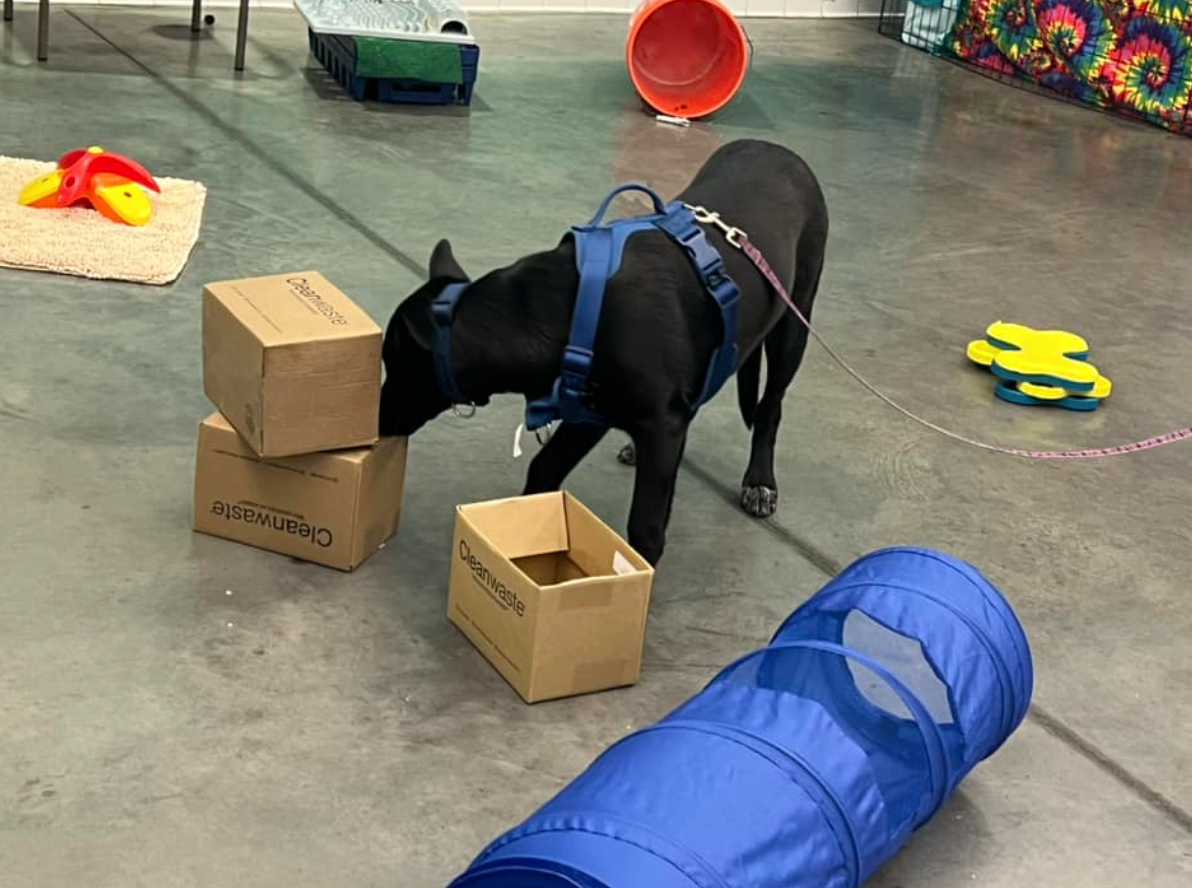
Hide and seek is a great way to provide novelty and scent-based stimulation.
5. Playgroups
We’ve talked ad-nauseum about the benefits of playgroups in the shelter environment, so it wouldn’t be right not to include them here. Playgroups are a great way to provide enrichment for multiple dogs at once, to improve conspecific skills, and to provide valuable data for pathway planning.
If you’re interested in developing a playgroup program at your shelter, struggling to implement consistent enrichment strategies, or simply looking for some professional help, Laurie Lawless offers a variety of remote and in-person services to fit your unique shelter’s needs. Check out the Shelter Behavior Integrations website to learn more about Laurie, access her educational services, and schedule a call today!