Positive Reinforcement in Animal Shelters
Positive reinforcement is the backbone of good animal handling and training. It’s an essential tool for animal welfare professionals, used to great effect in training basic manners, providing enrichment, and reducing noise in a shelter environment.
This term gets thrown around a lot in the animal welfare space–and for good reason–but when was the last time that you slowed down and brushed up on what exactly positive reinforcement is (and what it is not)? Let’s break down the components of positive reinforcement and discuss how you can utilize it in your shelter.
What is Positive Reinforcement?
The term “positive reinforcement” was first coined in 1937 by cognitive behaviorist B. F. Skinner in his study of operant conditioning. According to Skinner, there are four types of conditioning that can control behavior, including:
Positive Reinforcement: This is when a desirable stimulus (treats, praise, etc.) is introduced, encouraging a certain behavior to be performed.
Positive Punishment: This is when an undesirable stimulus (abrasive noise, physical punishment, etc.) is introduced to discourage a behavior.
Negative Reinforcement: This is when an undesirable stimulus is removed to encourage a behavior.
Negative Punishment: This is when a desirable stimulus is removed to discourage a behavior.
In the world of animal welfare, positive reinforcement is the gold standard for dog training and behavior modification. In addition to being the most effective approach to behavior modification compared to more aversive methods, positive reinforcement helps to alleviate feelings of uncertainty and fear amongst shelter dogs, who are already in stressful circumstances.
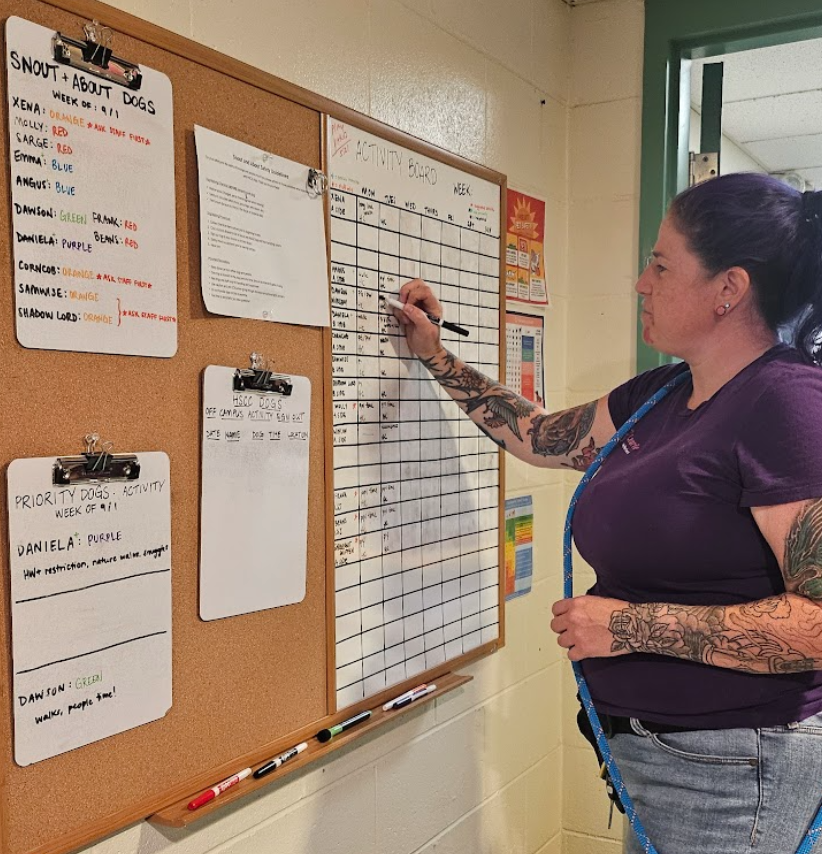
Consistent signage and staff communication is essential to effective positive reinforcement training in the shelter environment.
Why We Use Positive Reinforcement in Animal Shelters
Before we continue, let’s get one thing out of the way: punishment should not be used in work with shelter animals. Punishment is cruel, confusing, and damaging to the dog-human connection, which is of utmost importance in shelter dogs moving toward adoption. What’s more, punishment might “fix” a behavior issue in the short-term, but it’s likely to cause other problems down the road due to increased stress and anxiety.
Instead of aversive training methods, Shelter Behavior Integrations advocates for the use of positive reinforcement in all interactions with shelter dogs. This helps to strengthen the dog-human bond, reduce stress, and provide mental stimulation and enrichment.
Using Positive Reinforcement
Positive reinforcement is essential to supporting the behavioral health of shelter dogs, but it’s also very easy to get wrong. Careful attention to timing and consistency are everything, and getting the balance right can be tricky in the best of circumstances. Animal shelters tend to be loud, chaotic, and fast-paced, making it hard to be intentional about how we’re utilizing positive reinforcement. Let’s break down some basic tips to ensure that training efforts are effective at your shelter.
Be intentional with timing: When training a dog using positive reinforcement, timing is everything. Rewards must occur immediately to ensure that the desired behavior is being reinforced, or you run the risk of inadvertently reinforcing a behavior other than the desired one. To increase the likelihood of timely rewards, staff should be encouraged to carry treats with them as they go about their day-to-day duties, like daily rounds, cleaning, and playgroups. Likewise, you might consider attaching a treat container to the kennels of friendly dogs, with signage encouraging visitors to administer treats when they see a dog perform a desired behavior. These efforts will increase the likelihood of providing timely rewards for dogs in care.
Ensure consistency amongst staff: Dogs don’t understand complex language, so verbal cues should be kept short and consistent to avoid confusion. This is one of the hardest parts of positive reinforcement training, and the shelter environment makes it doubly hard. To that end, ensure that your shelter has an effective system of communication to ensure consistency in training across all levels of staff. This could be communicated through standard training best practices, signage attached to individual dogs’ kennels, and regular staff meetings to ensure that all staff are on the same page.
Track, evaluate, and adjust: When it comes to training initiatives in your shelter, data is your best friend. Be sure to keep careful records of training methods and outcomes to evaluate effectiveness. Review your data and communicate your findings with staff on a regular basis and adjust your methods accordingly.
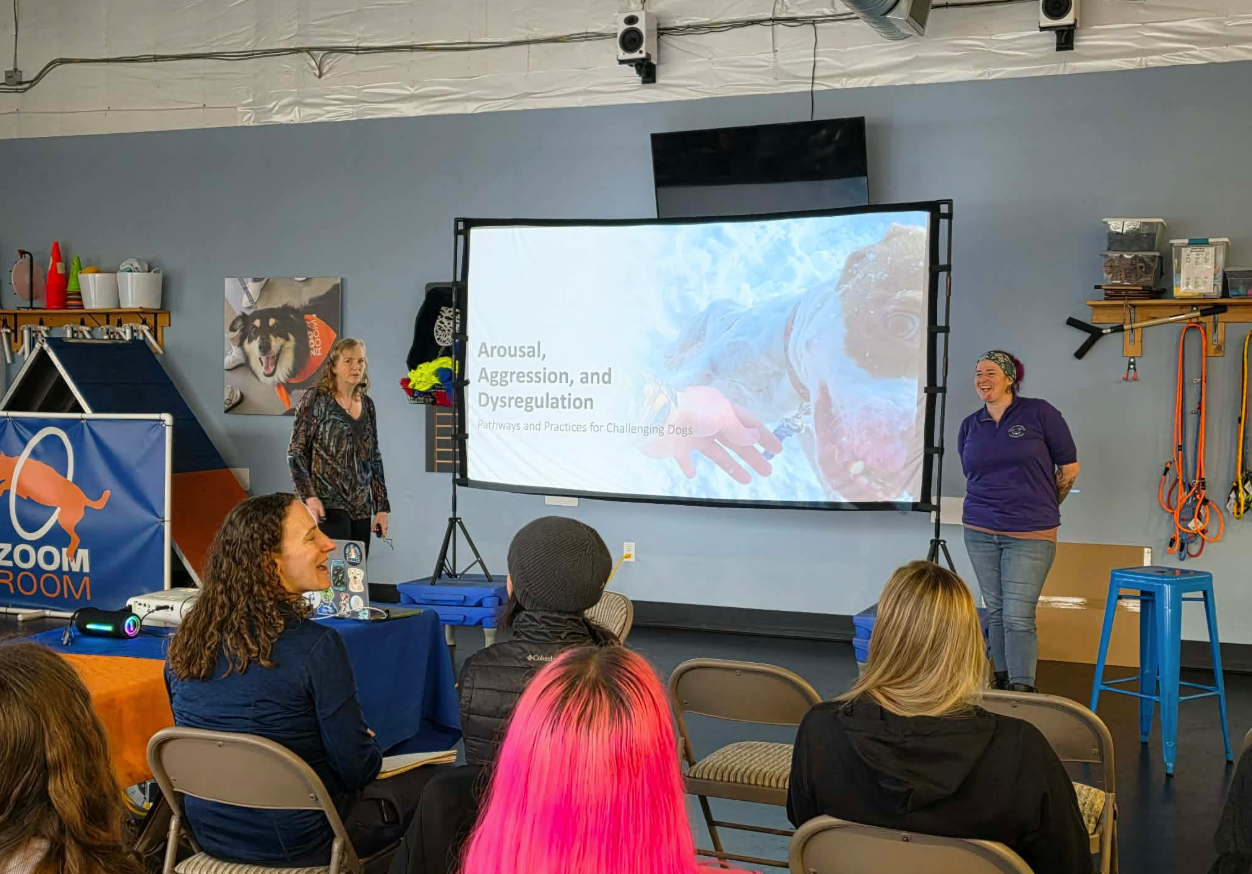
Laurie offers a variety of online and in-person support options to animal shelters interested in prioritizing their behavior work.
Looking for Ways to Use Positive Reinforcement at Your Shelter?
In the face of overwhelming need, it can be easy to lose your grip on the small things that have a big impact. Behavioral health can fall to the wayside in the face of dwindling funds, staff burnout, and administrative tasks. If your shelter is struggling to prioritize behavioral welfare, it might be time to seek the help of an expert.
Laurie Lawless has spent almost two decades working in the animal welfare field, and she founded Shelter Behavior Integrations to empower shelter managers and staff to prioritize animal behavior in every facet of shelter operations. Check out the SBI website to view our educational resources, access playgroup support, and book a one-on-one consultation with Laurie today.