Sign up to view this video
Join Now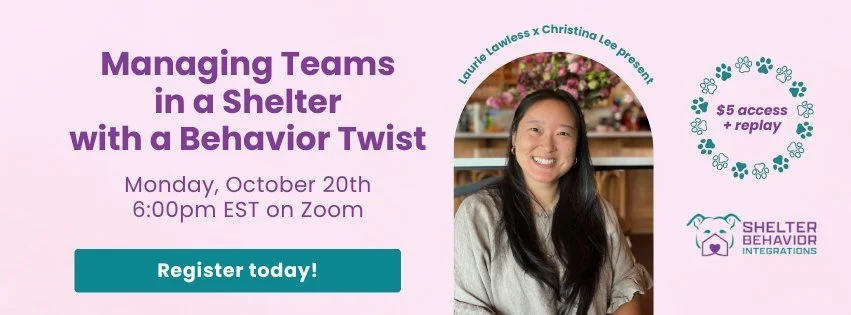
Managing Teams in a Shelter with a Behavior Twist
AI Meeting Summary
Behavior Team Management Strategies
Christina Lee presented on hiring, onboarding, and day-to-day leadership of shelter behavior teams using Prezi.
Discussed communication flow between volunteers and staff, integrating staff into behavior planning, and preventing burnout among younger team members.
Laurie introduced Christina, noting she was attending the CRC event in Ohio; session began after a brief welcome and housekeeping.
Building Effective Animal Welfare Teams
Christina emphasized inclusive hiring—removing unnecessary education requirements and focusing on both technical and interpersonal skills.
Highlighted the value of cultural add over cultural fit to strengthen team diversity and creativity.
Stressed the importance of consistent onboarding, clear leadership, and ongoing mentorship, coaching, and advocacy for team members.
Encouraged regular one-on-one check-ins that respect each individual’s communication style and promote open feedback.
Team Building and Communication Initiatives
Reinforced the importance of consistent one-on-one meetings—even if rescheduled—to maintain connection and accountability.
Suggested collaborative team-building activities during work hours (bonus points for including food!).
Introduced the concept of a Behavior Roundtable—a biweekly, cross-department meeting to align on animal cases and strengthen communication.
Recommended K9 Classroom training to connect behavior and non-behavior staff through shared learning.
Dog Training for Shelter Staff
Laurie shared success from a weekly staff training program focused on consistent handling and operant conditioning.
Christina emphasized the cost-effectiveness and engagement benefits of such programs.
Laurie discussed the importance of leadership development and feedback for managers.
Closed with a Richard Branson quote: “Train people well enough so they can leave. Treat them well enough so they don’t want to.”
Behavior Education in Animal Shelters
Christina addressed the challenges of behavior modification in shelter settings.
Suggested developing a Behavior Portal or Roundtable for staff to access updates and behavior notes.
Encouraged internal webinars or presentations to educate teams on assessment processes and outcome decisions.
Animal Behavior Management Collaboration
Christina and Laurie shared success stories—like using a Kong to reduce a dog’s reactivity during car rides.
Discussed the importance of sharing these wins across staff to promote learning and collaboration.
Christina emphasized breaking down fear-based communication barriers and encouraging openness without judgment.
Laurie noted that dismissing staff ideas can create silence and disengagement, reinforcing the need for psychological safety.
Breaking Down Shelter Communication Barriers
Christina explored systemic shelter culture issues that discourage transparency—especially around euthanasia discussions.
Stressed the importance of cross-department education and volunteer awareness of the behavior team’s scope.
Encouraged visible, accessible systems for reporting behavior concerns to foster trust and understanding.
Animal Shelter Behavior Management Strategies
Highlighted transparency and collaboration between departments—especially behavior and medical teams.
Shared strategies to gain buy-in for new enrichment tools by framing ideas as questions rather than directives.
Discussed preventing burnout through clarity, open communication, and transparent expectations for younger staff.
Reinforced that professional development and trust-building are essential to sustaining a healthy, high-functioning behavior team.